A COMPLETE GUIDE TO BLUETOOTH, USB AND QD CABLE OFFICE HEADSSETS
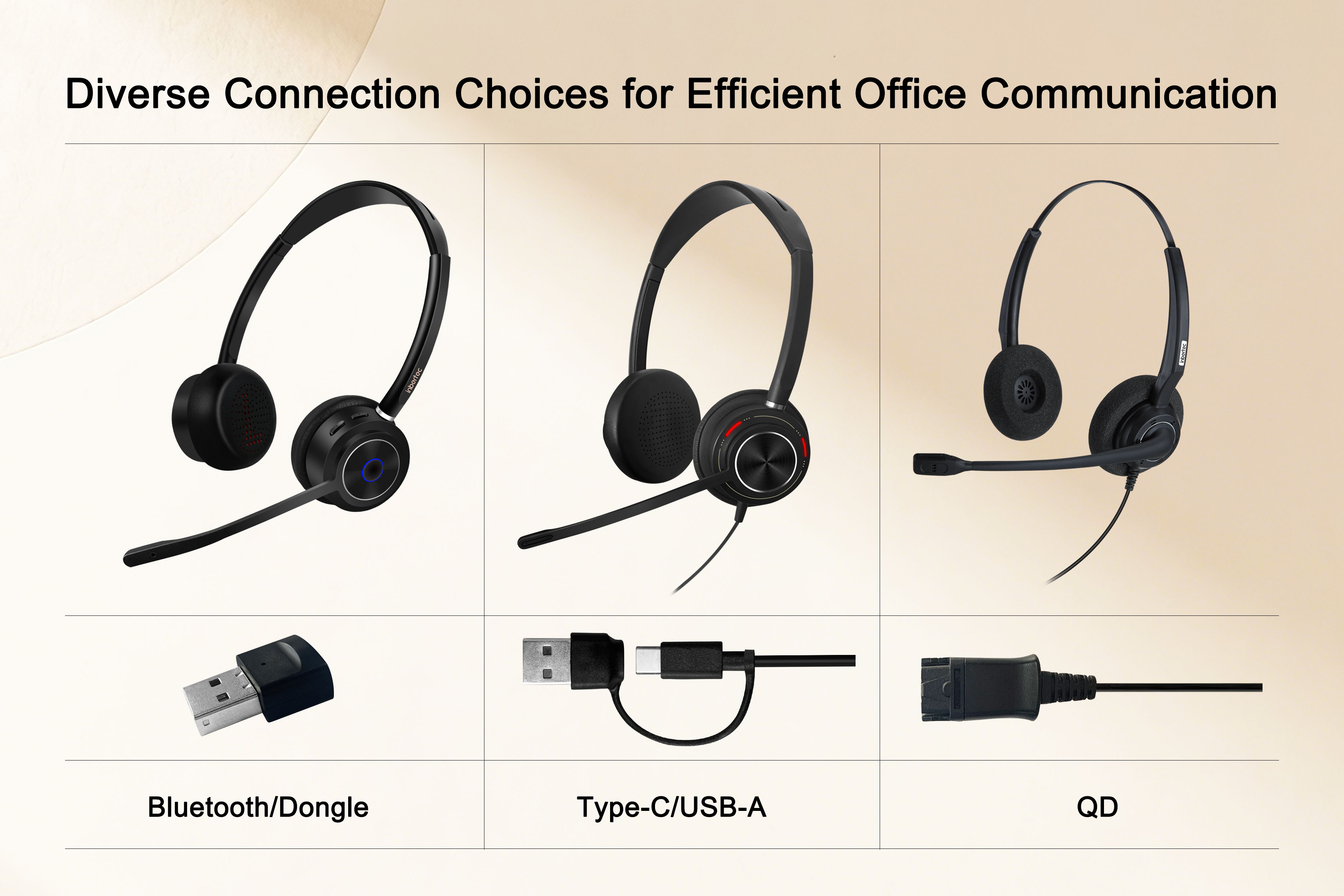
When choosing professional headsets for the office, call centers or remote work, Bluetooth, USB and QD cable are the three most common connection solutions. They may seem interchangeable, but each has unique working principles, performance features and targeted application scenarios. Selecting the wrong type will directly reduce work efficiency and communication experience. Below we break down the core differences, advantages and recommended products for each connection type.
Bluetooth Headsets: Wireless Freedom for Flexible Work
Bluetooth headsets connect to devices via wireless Bluetooth signals, completely free from cable restrictions. They adopt universal Bluetooth 5.0 or higher protocol, supporting stable pairing with laptops, smartphones and tablets. This connection type offers strong portability and flexible movement, allowing users to walk around freely within a certain range without being tied to their desks.
They are ideal for remote workers, flexible office staff and those who need to switch between multiple devices frequently. The built-in rechargeable battery supports long continuous use, and the quick-pairing function saves setup time. However, Bluetooth connections may be affected by wireless interference, and the battery requires regular charging, making this type less suitable for 24/7 uninterrupted call center operations.
Recommended Product: Inbertec Business Bluetooth Wireless Headset, equipped with a noise-canceling microphone, stable multi-device pairing and all-day comfort design, perfect for hybrid office scenarios.
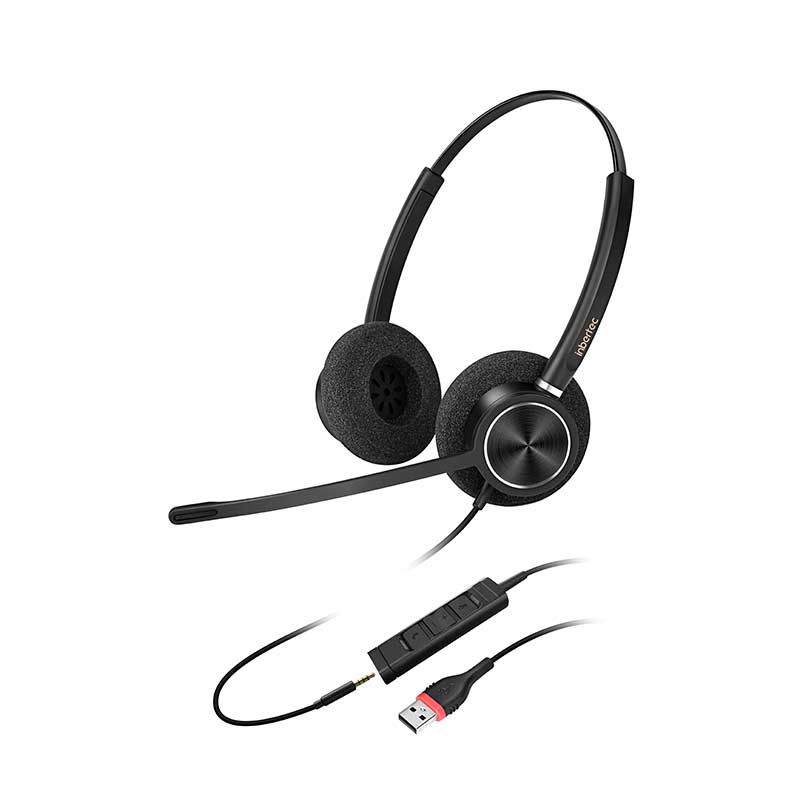
USB Headsets: Stable Wired Performance for Daily Office
USB headsets transmit audio and power through a standard USB-A or USB-C cable. With a built-in digital audio chip that bypasses the device’s original sound card, they ensure clear and stable audio delivery. This plug-and-play connection requires no additional drivers, providing zero delay and no wireless interference with