In the fiercely competitive landscape of global headset sourcing, importers across the world are frequently drawn to three seemingly pivotal factors: competitive pricing, on-time delivery, and innovative product design. It is easy to understand why—cost efficiency directly impacts profit margins, timely delivery ensures smooth supply chain operations, and unique design helps products stand out in crowded markets. For a long time, these elements have been regarded as the top priorities in sourcing decisions, overshadowing another equally, if not more, critical factor: compliance. However, the harsh reality of international trade proves that what truly dictates a product’s smooth and successful market entry is rarely cost or logistics, but uncompromising compliance with global regulatory standards.
For brand owners, dedicated distributors, and corporate procurement teams planning to import unified communications (UC) headsets, call center headsets, or Bluetooth office headsets, regulatory compliance is not a discretionary extra or a trivial formality—it is a non-negotiable prerequisite for survival and growth in global markets. Among the array of international certifications, CE, FCC, and RoHS certifications stand out as the fundamental hurdles that no business can afford to overlook. These certifications are not just formal stamps of approval; they are powerful passkeys that directly influence every stage of cross-border trade, from customs clearance to online and offline platform sales, and from legal risk mitigation to long-term brand reputation building.
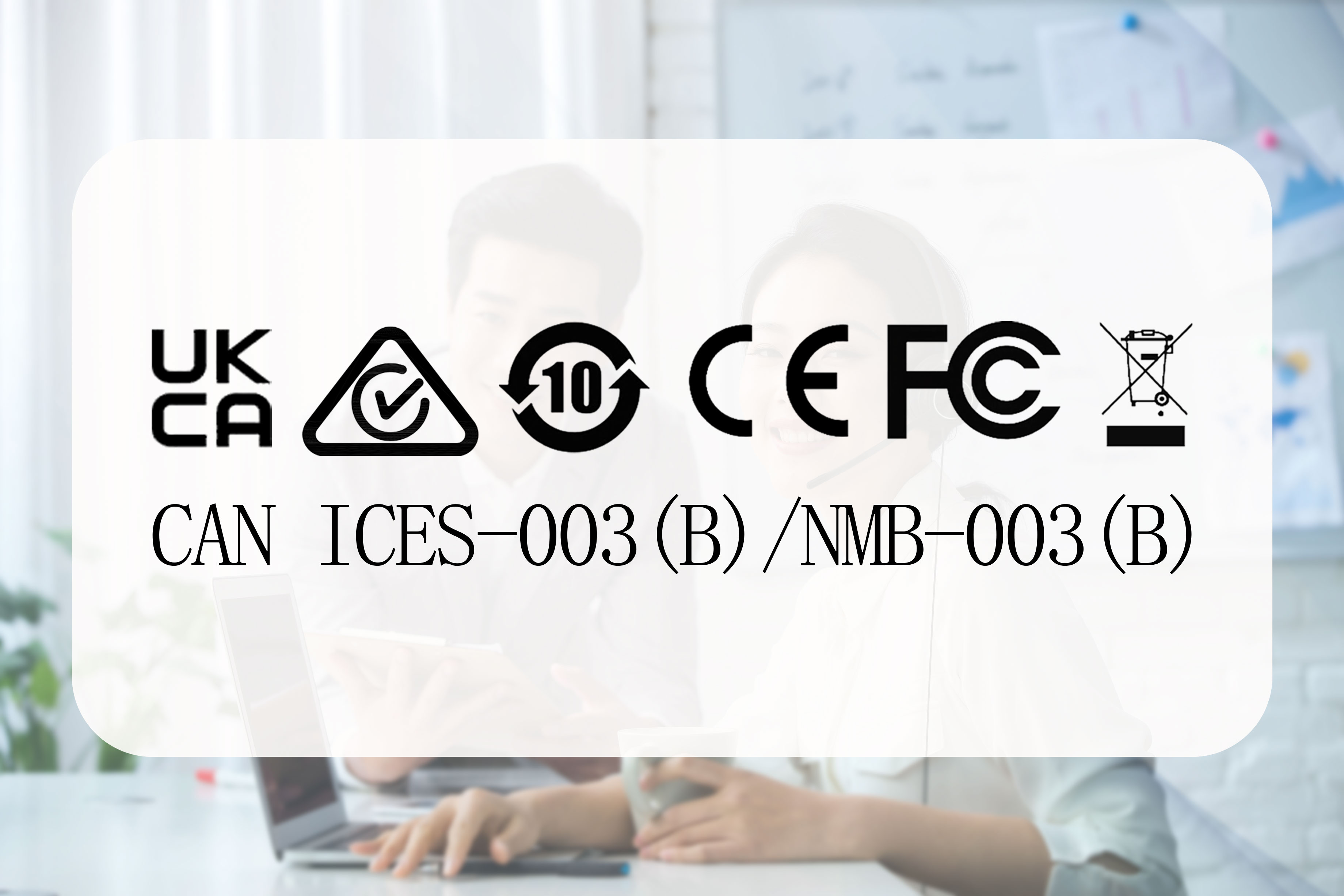
Take customs clearance as the first critical checkpoint. Without valid CE certification, headsets bound for the European Economic Area will be detained, rejected, or even destroyed at European ports, resulting in massive financial losses from wasted inventory, delayed shipments, and breached contracts. Similarly, FCC certification is mandatory for wireless Bluetooth headsets entering the United States market, as it verifies that the products comply with electromagnetic compatibility standards and do not interfere with public communication signals. Any shipment lacking proper FCC certification will face strict customs inspections and outright bans, halting market entry before the product even reaches consumers. Meanwhile, RoHS certification, which restricts the use of hazardous substances such as lead, mercury, and cadmium in electronic products, is a core requirement for accessing the European market and an increasing number of global markets. Non-RoHS-compliant headsets not only fail customs clearance but also violate environmental protection laws, triggering immediate regulatory penalties.
Compliance directly determines whether headsets can be legally sold on mainstream cross-border e-commerce platforms and offline retail channels. Major global sales platforms have stringent regulatory review mechanisms, requiring all listed electronic products to provide complete compliance certification documents. Products without CE, FCC, or RoHS certifications will be removed from shelves, facing listing removals, account suspensions, or even permanent bans from the platform. This not only leads to immediate sales losses but also disrupts brand marketing strategies and erodes consumer trust that takes years to build.
Legal liability and brand risk are equally devastating consequences of non-compliance. In regions with strict regulatory frameworks such as the European Union and the United States, importers and brand owners bear full legal responsibility for non-compliant products sold in the market. This includes facing heavy fines, mandatory product recalls, and even civil litigation from consumers who suffer harm from hazardous or substandard products. A single compliance violation can trigger a cascade of legal troubles, draining corporate resources and damaging financial stability. More importantly, brand reputation, the most valuable intangible asset for any business, can be irreparably tarnished. News of non-compliant, unsafe, or environmentally harmful products spreads rapidly through global media and social platforms, leading to widespread consumer backlash, loss of brand loyalty, and long-term damage to market image that is far more costly than any savings from cutting compliance corners.
In contrast, prioritizing compliance in global headset sourcing brings far-reaching long-term benefits. Compliant products gain unimpeded access to global markets, ensuring stable supply chain and sales operations. Proactive adherence to international regulatory standards also helps businesses stay ahead of evolving global trade rules, reducing the risk of future compliance issues. Moreover, certified products convey a strong message to consumers and partners: the brand values safety, environmental protection, and legal compliance, enhancing brand credibility and market competitiveness.
In conclusion, while price, delivery time, and design remain important considerations in global headset sourcing, they must take a backseat to compliance. For businesses engaged in importing UC headsets, call center headsets, and Bluetooth office headsets, CE, FCC, and RoHS certifications are the foundation of successful cross-border operations. Viewing compliance as a strategic investment rather than a cost burden is the key to avoiding avoidable risks, unlocking global market opportunities, and achieving sustainable long-term development in the complex global trade landscape.