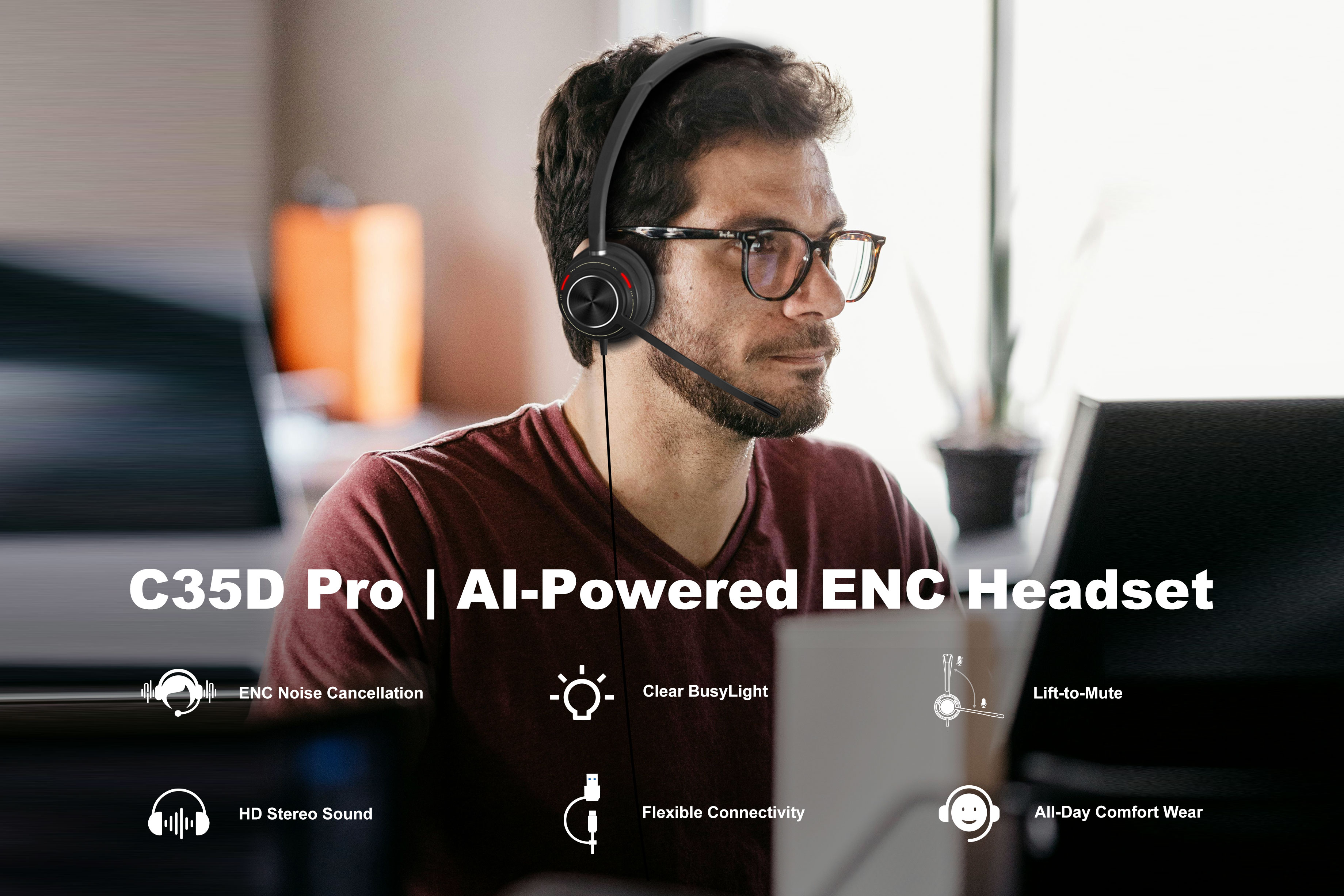
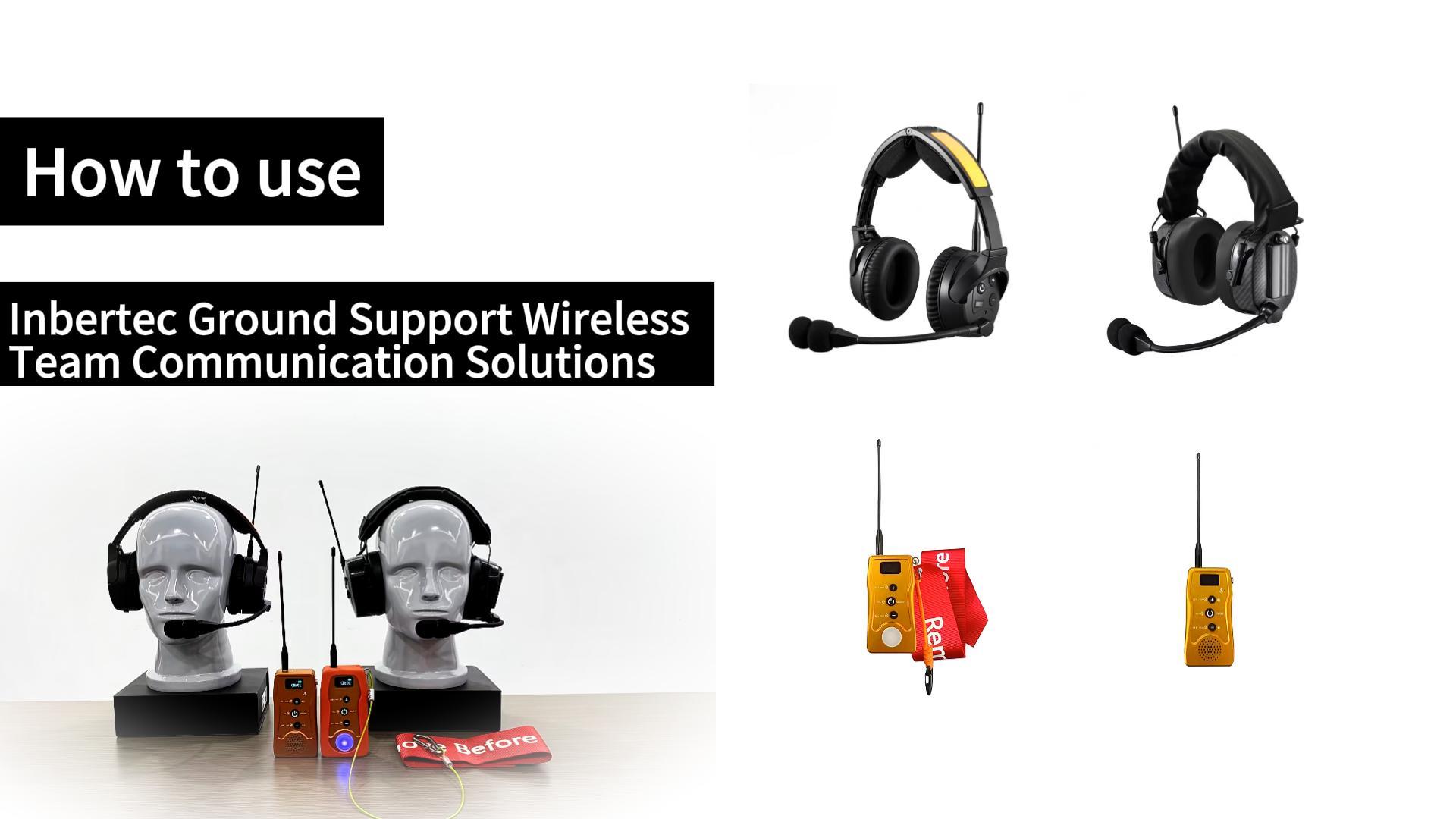
When it comes to selecting cost-effective call center headsets, it is essential to clarify the evaluation standards for cost performance. Inbertec hereby puts forward exploratory conclusions to assist manufacturers in selecting call center headset brands.

- What is a Call Center Headset
We have elaborated on the definition before, and we will restate it briefly here.
A call center headset is specially designed for operators, customer service representatives, sales personnel and other professionals who make frequent voice calls. It generally consists of an on-ear or over-ear earpiece paired with a boom microphone. It can be connected to landline phones, computers and other devices via wired or wireless modes to realize two-way voice communication.
- Cost Performance Evaluation Criteria for Call Center Headsets
There are numerous metrics to assess call center headsets, and evaluating from the perspective of cost performance is a mainstream choice for most buyers. So how exactly should we judge the cost performance of a call center headset?
Sound Quality and Noise Reduction Performance
Sound quality and noise reduction are core indicators for measuring the cost performance of call center headsets. Sound quality refers to the degree to which voice signals retain original acoustic characteristics such as pitch, volume and timbre during transmission. Noise reduction performance means the capability to eliminate or suppress ambient background noise and echo in voice transmission. Better sound quality and noise reduction deliver superior calling experience and higher user satisfaction. When making selections, buyers shall focus on the following dimensions:
- Loudspeaker performance: As the core component converting data packets into sound waves for listening, its performance is determined by frequency response range, sensitivity, impedance and other parameters. Generally speaking, a wider frequency response range, higher sensitivity and lower impedance contribute to better sound reproduction.
- Microphone performance: The microphone converts sound waves into digital signals for the receiving party. Its performance depends on directivity, sensitivity, signal-to-noise ratio, etc. Higher directivity, greater sensitivity and larger signal-to-noise ratio enable stronger noise suppression of the microphone.
- Types of noise reduction technology: Noise reduction is a signature feature of call center headsets. Processed by dedicated algorithms and circuits, voice signals can be optimized to filter out background noise and echo. There are two primary types: active noise cancellation (ANC) and passive noise reduction. Active noise cancellation offsets external noise by generating anti-phase sound waves; passive noise reduction blocks noise through physical isolation and acoustic filtering. Active noise cancellation achieves better effects but consumes more power and comes with a higher price tag.
Wearing Comfort and Durability
Comfort and durability are also vital benchmarks for cost performance. Wearing comfort refers to the degree of pressure and discomfort brought by long-time wear, while durability stands for the headset’s resistance to damage and aging in daily use. Higher comfort and longer service life greatly improve user experience. Key factors to check include:
- Ear cushion materials: Ear cushions act as the contact part between speakers and ears and provide physical sound insulation. Common materials are sponge and faux/genuine leather. Sponge cushions are ultra-soft and comfortable yet prone to absorbing sweat and dust; leather cushions are easier to clean and maintain with slightly inferior softness.
- Position and angle of the microphone boom: The placement and angle of the boom directly affect call clarity and wearing experience. Ideally, the microphone shall be positioned in front of the mouth at a proper distance and angle to avoid interference from breathing sounds, wind noise and plosives. Meanwhile, it should not touch the face or hair to prevent irritation.
Compatibility and Expandability
Compatibility refers to the headset’s ability to connect and match with various brands and models of landlines, computers and terminals. Expandability means its capacity to integrate with diverse software applications and functional modules. Strong compatibility and expandability extend the application scenarios and overall value of the headset. Key points for reference:
- Interface types: Connection ports are divided into wired and wireless categories. Common wired interfaces include RJ9, RJ11, USB and 3.5mm audio jacks; wireless options cover Bluetooth and wireless USB dongles. Wired connections boast higher stability and anti-interference performance but lack flexibility; wireless connections are more portable and free of cable restraints yet consume more power and are susceptible to signal interference.
- Adapters and converters: These auxiliary accessories realize cross-interface conversion to improve device compatibility, though they will raise overall procurement costs and increase connection complexity.
- Software and function support: Integrated applications enable extended functions such as video conferencing, instant messaging and voicemail, which enhance expandability but may occupy more system resources and bring potential security risks.
After-sales Service and Warranty Period
High-quality after-sales service and reliable warranty serve as important guarantee for cost performance. After-sales service covers maintenance, replacement, return and technical consultation provided by manufacturers or distributors after sales. The warranty period refers to the valid time frame for free repair or replacement. Complete after-sales support builds users’ trust and confidence. Evaluation dimensions include:
- Service quality: Measured by service attitude, response speed, service coverage and maintenance charges, high-quality after-sales service helps improve customer satisfaction and loyalty.
- Warranty length: Calculated in months or years, a longer warranty period brings stronger peace of mind to buyers.
Does the above cost performance evaluation system seem complicated? Admittedly it is. In fact, recommending cost-effective call center headset brands strictly in accordance with all metrics poses certain challenges.Combining the above cost performance criteria and other comprehensive factors, we recommend headsets manufactured by Inbertec.