As a manufacturer of call center headsets, Inbertec offers three mainstream models:
- NT C10 USB Headset: Entry-level, physical noise cancellation, covers basic daily needs, cost-effective.
- C15 / C25 USB Headset: Cost-effective, ENC dual-mic noise cancellation, wideband audio, durable structure for efficient customer communication.
- 805 / 815 USB Headset: Premium model, ENC dual-mic noise cancellation, integrated boom arm, more robust structure, wideband audio, 320° rotatable boom arm.
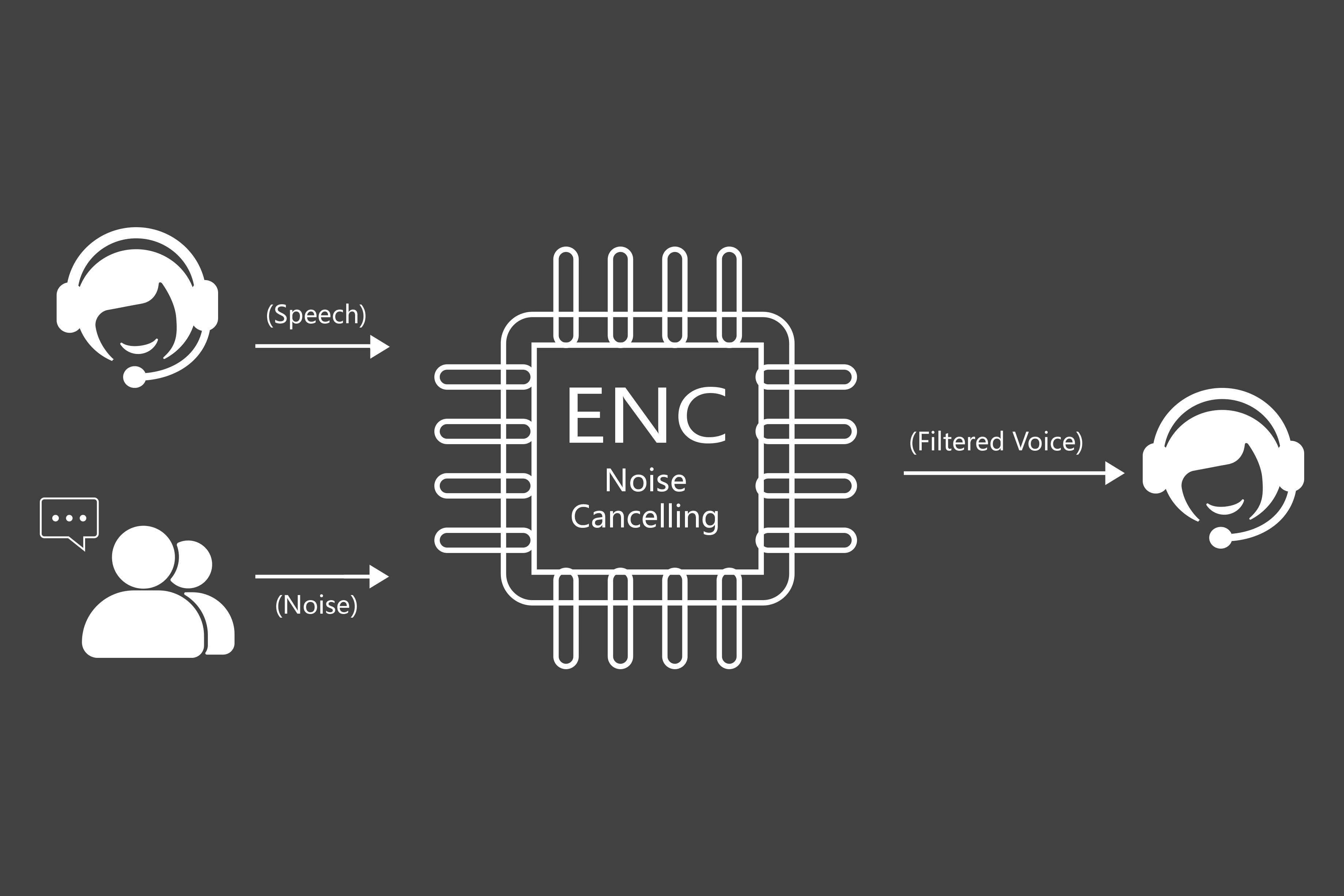
What is Physical Noise Cancellation and ENC Dual-Mic Noise Cancellation?
Physical Noise Cancellation
Blocks external noise physically through tight earcup design and high-quality sound-insulating materials. Its effect is limited.
In terms of performance: In-ear > Over-ear > On-ear.
ENC Dual-Mic Noise Cancellation
Uses two microphones working together:
- One microphone captures ambient noise.
- The other captures both human voice and ambient noise.
The chip compares the two signals, builds a noise model, and subtracts it from the mixed signal in real time, transmitting clear human voice to the other party and greatly reducing background noise heard by the listener.
Why can sound still be heard after ENC noise cancellation?
ENC algorithms selectively preserve dynamic signals such as music and human voice to avoid voice distortion.
Meanwhile, there is a slight processing delay, so sudden sounds cannot be fully canceled.
This design also ensures users can perceive important surrounding sounds for safety and natural communication.
Why does no brand promise “100% noise cancellation”?
No professional call center headset brand claims “100% noise cancellation” — not even international leaders such as Jabra, Plantronics/Poly, Logitech, or EPOS.
This is not a technical limitation, but a deliberate professional design choice.
Mature brands balance safety regulations, usage scenarios, health considerations, and practical performance.
As a professional headset manufacturer, Inbertec always recommends customers focus on practical noise reduction needs in real working environments, rather than chasing marketing numbers.
In call center settings, retaining a certain level of environmental awareness is a feature, not a flaw — a safety design, not a technical shortcoming.
Even if customers request “100% noise cancellation” for marketing purposes, we uphold our professional stance:
Excessive noise cancellation harms voice clarity and authenticity. This is not a lack of technical capability, but a responsible choice for user experience and safety.
Potential risks of excessive noise cancellation (using ENC as an example):
- Voice distortion & word truncation
Over-suppressing ambient sound may interfere with voice frequencies, resulting in dry, robotic audio, or lost syllables and words.
- Loss of environmental awareness
Users may fail to notice colleagues, announcements, or critical alerts, harming collaboration and safety.
- Increased algorithm side effects
Pursuing “perfect silence” can introduce latency, digital artifacts, bubbling, or breathing noises, degrading call quality.
- Psychological discomfort
Overly clean audio feels unnatural, making the other party suspect they are speaking to a robot and weakening trust.
In short, a moderate amount of ambient sound (such as faint keyboard noise or background conversation) actually preserves a natural, authentic communication environment, ensuring natural speech and realistic context.